What Is a Block Explorer and Why It Matters
Learn what a block explorer is, how it works, and why it matters. Understand the difference between wallets and explorers and how to verify onchain activity.

If you’re new to crypto, you’ve probably heard someone say “check the blockchain” or “look it up on a block explorer.” But what does that really mean, and why would you need one if you already use a wallet?
If the blockchain was a bank (and really it is the best kind of bank, one that is owned by no one and supports everyone!), you wallet would be similar to a banking app. It shows your balance and lets you send and receive funds.
A public block explorer, however, is more like a complete records office for the entire blockchain. It lets anyone see what’s happening on the network in real time and verify that transactions actually happened.
The Basics, Explained Simply
At the root level, a block explorer is essentially a search engine for blockchain data.
You can query an explorer with a transaction hash (0x...), address hash, ENS name, tag or even a project name, and get directed to the correct information.
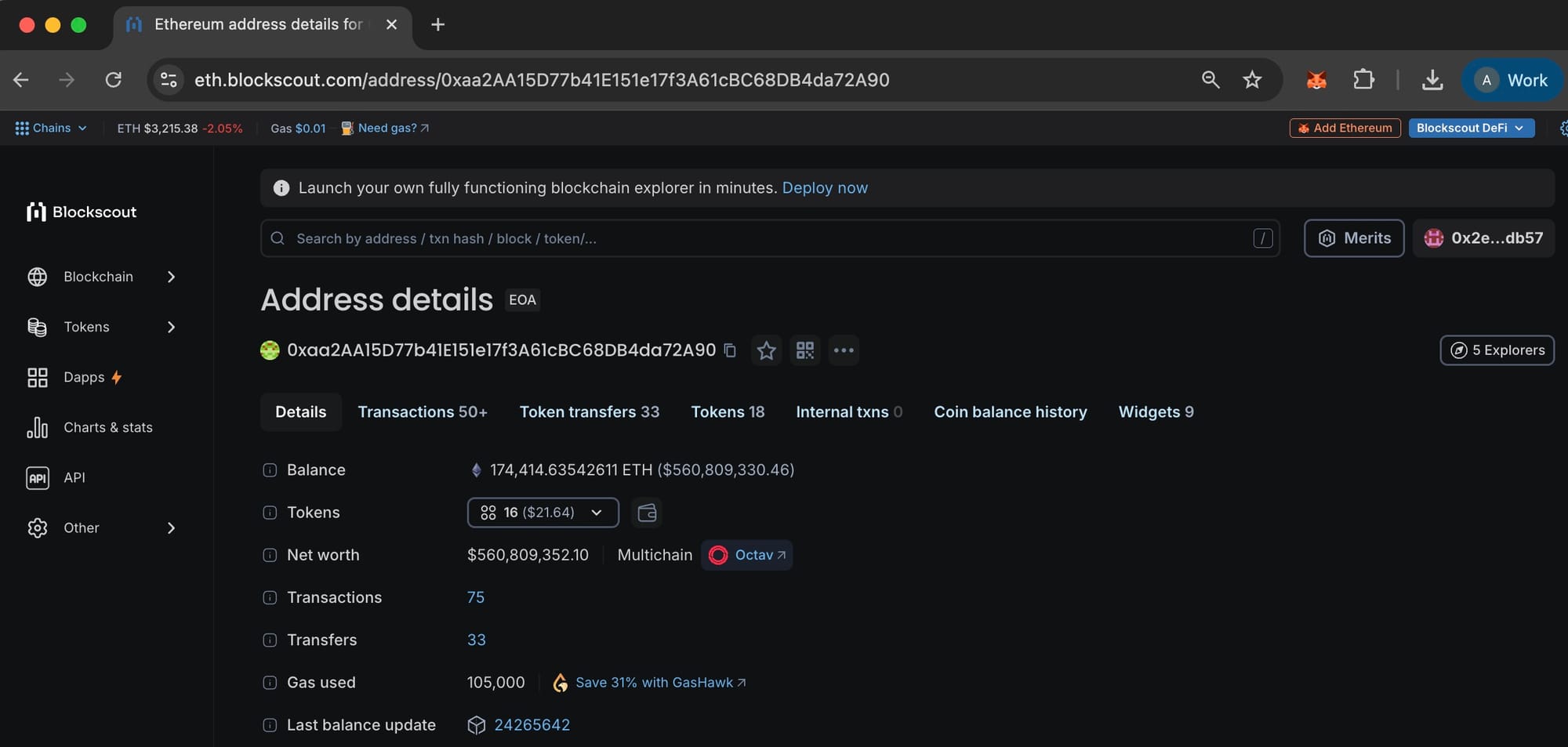
Just like Google or Duck Duck Go helps you find websites, a block explorer helps you look up events that happened on the blockchain (as well as additional related meta data which is brought in from external sources to give context to data).
Every action on a blockchain, such as sending tokens, minting an NFT, or interacting with a smart contract, gets recorded in blocks. These blocks are linked together in order, forming a permanent, public history of everything that happens on the network.
Block explorers take that raw data and present it in a way people can actually understand. Instead of cryptic code, you see clear details like transaction amounts, timestamps, sender and receiver addresses, and confirmation status. Explorers like Blockscout also use AI to provide human-readable transaction status.
These details are available through a UI or via API, which many projects prefer to help populate their own front-end interfaces.
Wallets vs. Block Explorers: Different Jobs
A common question is why you’d need a block explorer if your wallet already shows transaction history. The answer comes down to when and how each tool is used.
- Your wallet is mainly a pre-transaction tool. It helps you send funds, check balances, and manage your assets. It shows you a simplified view of blockchain data, focused only on your activity.
- A block explorer is a post-transaction verification tool. Once a transaction is sent, the explorer lets you track it through the network, confirm it was included in a block, and inspect every detail.
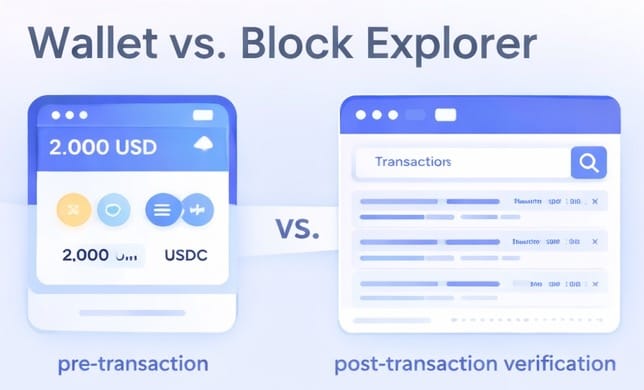
For example, imagine you send 2000 USDC to a friend. Your wallet shows “pending,” but your friend hasn’t received anything yet. Is the network congested? Did the transaction fail? Did you send it to the wrong address?
Your wallet may not give you clear answers. A block explorer will. By searching for the transaction hash, you can see exactly what’s happening — confirmation count, gas fees, and whether the transaction is pending or has succeeded or failed.
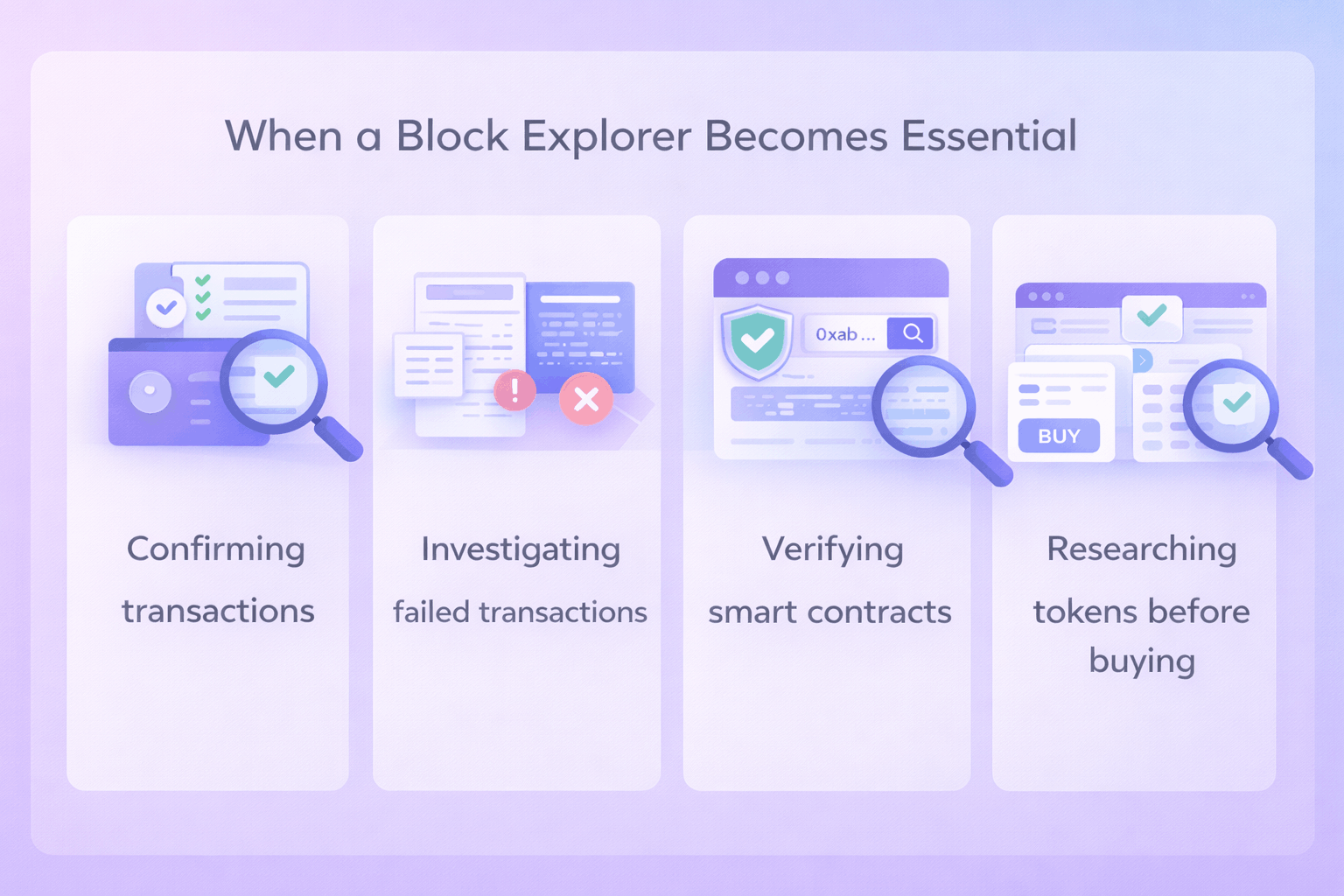
When a Block Explorer Becomes Essential
Block explorers are especially useful in everyday situations like:
- Confirming transactions
Check whether a transfer succeeded, how many confirmations it has, and when it was included in a block. - Investigating failed transactions
If something goes wrong, explorers often show error messages explaining why, for example insufficient gas or a reverted smart contract call. - Verifying smart contracts
Before interacting with a DeFi app or NFT contract, you can confirm the contract address of the app, review verified source code, and see real usage data. This helps provide security and piece of mind, especially before sending large transacitons. - Researching tokens before buying
Explorers let you see token supply, holder distribution, recent transfers, and potential red flags like suspicious minting behavior. - Monitoring network activity
You can watch new blocks being produced, track gas prices, and see which contracts or addresses are most active. - Reviewing your full history
Wallets can miss data or simplify complex interactions. Explorers show everything your address has ever done, unfiltered.
Why Block Explorers Are the Source of Truth
One important thing to understand: your wallet doesn’t actually store your crypto. Your assets live on the blockchain. The wallet just holds your private keys and displays what the blockchain says your address owns.
Because of that, wallets sometimes lag behind or show incomplete information. They rely on their own servers and interpretations of on-chain data.
Block explorers read directly from blockchain nodes. They display exactly what’s recorded on the network, without filtering or assumptions.
That’s why explorers are the definitive place to answer questions like:
- Did this transaction really happen?
- What is the true balance of this address?
- What function did this smart contract call?
- Is this token or contract legitimate?
When accuracy matters, explorers are the final authority.
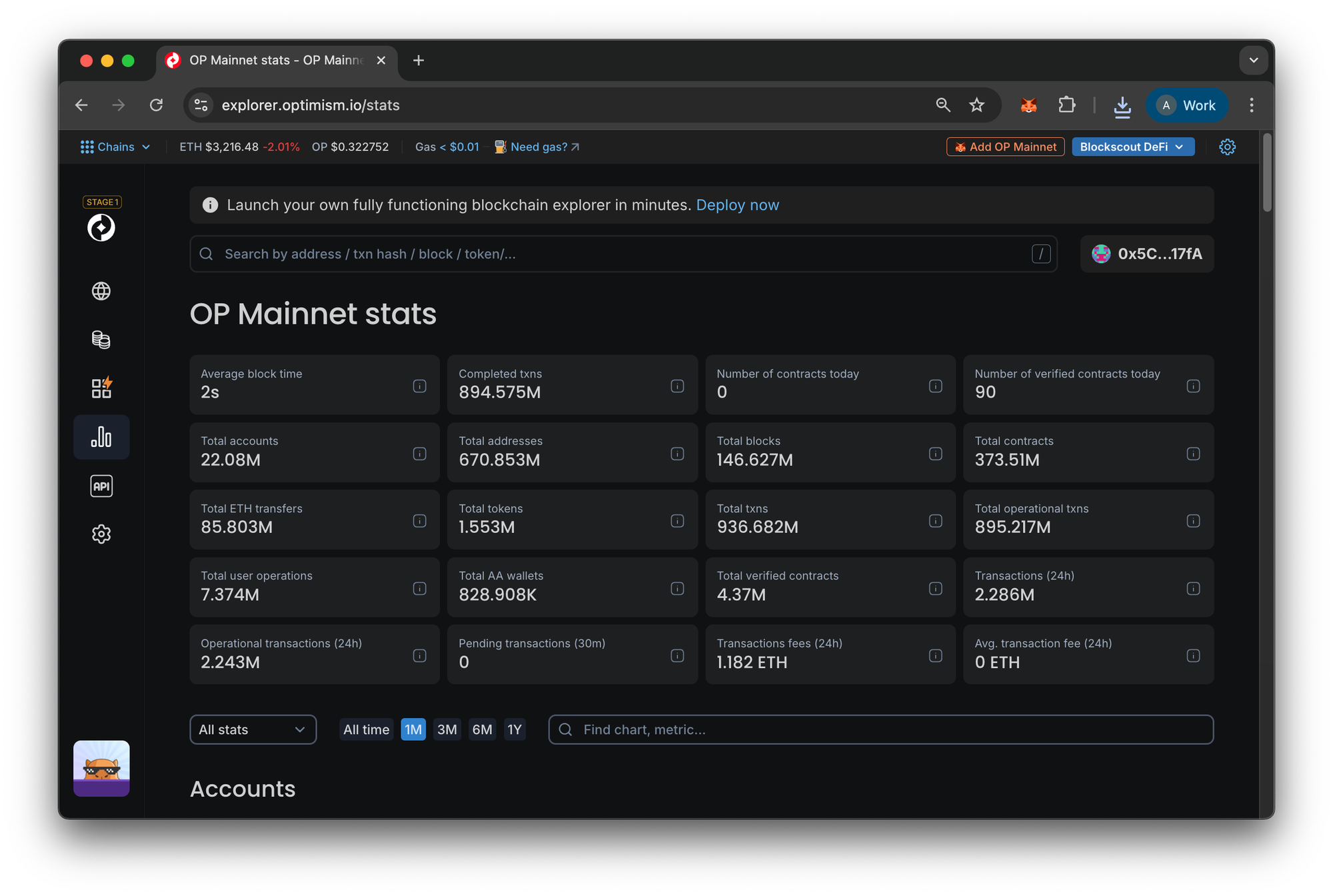
What You Can Look Up on a Block Explorer
Most explorers organize data into a few core sections:
- Blocks: when they were mined, how many transactions they contain, and validator or miner rewards
- Transactions: sender, recipient, value, gas fees, and status
- Addresses: balances, transaction history, and contract details
- Tokens: supply, holders, transfers, and contract info
- Analytics: charts showing network usage, gas trends, and activity over time
- Metadata: Additional contextual data such as tags, flags (for suspicious behavior), and project information.
Choosing the Right Block Explorer
Different explorers support different blockchains. Some focus on a single network, while others work across many chains.
When choosing one, look for:
- Fast and accurate search
- Clear, decoded transaction data
- Verified smart contracts
- API access for developers
- Multichain support if you use multiple networks
Some explorers require API keys for advanced usage, while others are fully open. The right choice depends on how deeply you want to explore the data.
Final Thoughts
Block explorers may feel intimidating at first, but they’re actually one of the best tools for understanding how blockchains really work.
Wallets help you use crypto. Explorers help you verify it.
Because blockchains are transparent by design, and explorers turn that transparency into something practical. They are essential for developers, but also a good reference for any user to familiarize themselves with.
Once you’re comfortable using a block explorer, you’ll move through crypto with more confidence, clarity, and control. And the next time someone says “check the blockchain,” you’ll know exactly where to look.