
Multichain Block Explorer: A Unified Discovery Layer for the EVM
Explore the EVM in one place with Blockscout’s Multichain Explorer. Analyze wallets, tokens, and onchain data across chains with a unified view of the ecosystem.

Daily DeFi life is no longer defined by a single chain. It’s an expanding network of rollups, L2s, and appchains where we move assets, interact with contracts, and explore activity across multiple ecosystems every day.
Ethereum, Base, OP Stack chains, Gnosis, Celo, Soneium, Ink, and many more are all part of the same broader environment. You likely move between them constantly. Tokens exist across them. Wallets switch networks seamlessly.
Why the EVM Needs a Discovery Layer
To analyze a wallet across multiple chains today, you'd typically need to:
- Open separate explorers for Ethereum, Base, OP chains, and others
- Search the same address repeatedly
- Manually piece together balances and activity
- Switch interfaces to understand what is happening across networks
This fragmentation makes it difficult to see the full picture.
What’s missing is a unified discovery layer for the EVM. A single platform where you can explore activity across networks and understand how wallets, tokens, and contracts operate across the broader ecosystem.
That’s exactly what the Blockscout Multichain Explorer provides.
Meet the Blockscout Multichain Explorer
The Multichain Explorer provides a complete block explorer experience across many EVM networks.
From one interface, you can:
- Search addresses, tokens, and contracts across chains
- Analyze wallet activity across ecosystems
- Explore network statistics and growth metrics
- View token data across multiple chains
- Navigate seamlessly to chain-specific explorers
It includes everything you'd normally get from Blockscout, but organized around a unified view of the EVM ecosystem. The result is a discovery layer that reflects how people actually interact with onchain systems today.
You can still dive into individual chain explorers when needed, but discovery now begins from one place.
Multichain Explorer: Show & Tell
Let’s walk through the core sections of the multichain explorer and how they help you explore activity across the ecosystem.
Homepage
The homepage provides an immediate overview of activity across supported chains. Some high-level signals include total transactions, total addresses, daily trends and network activity.
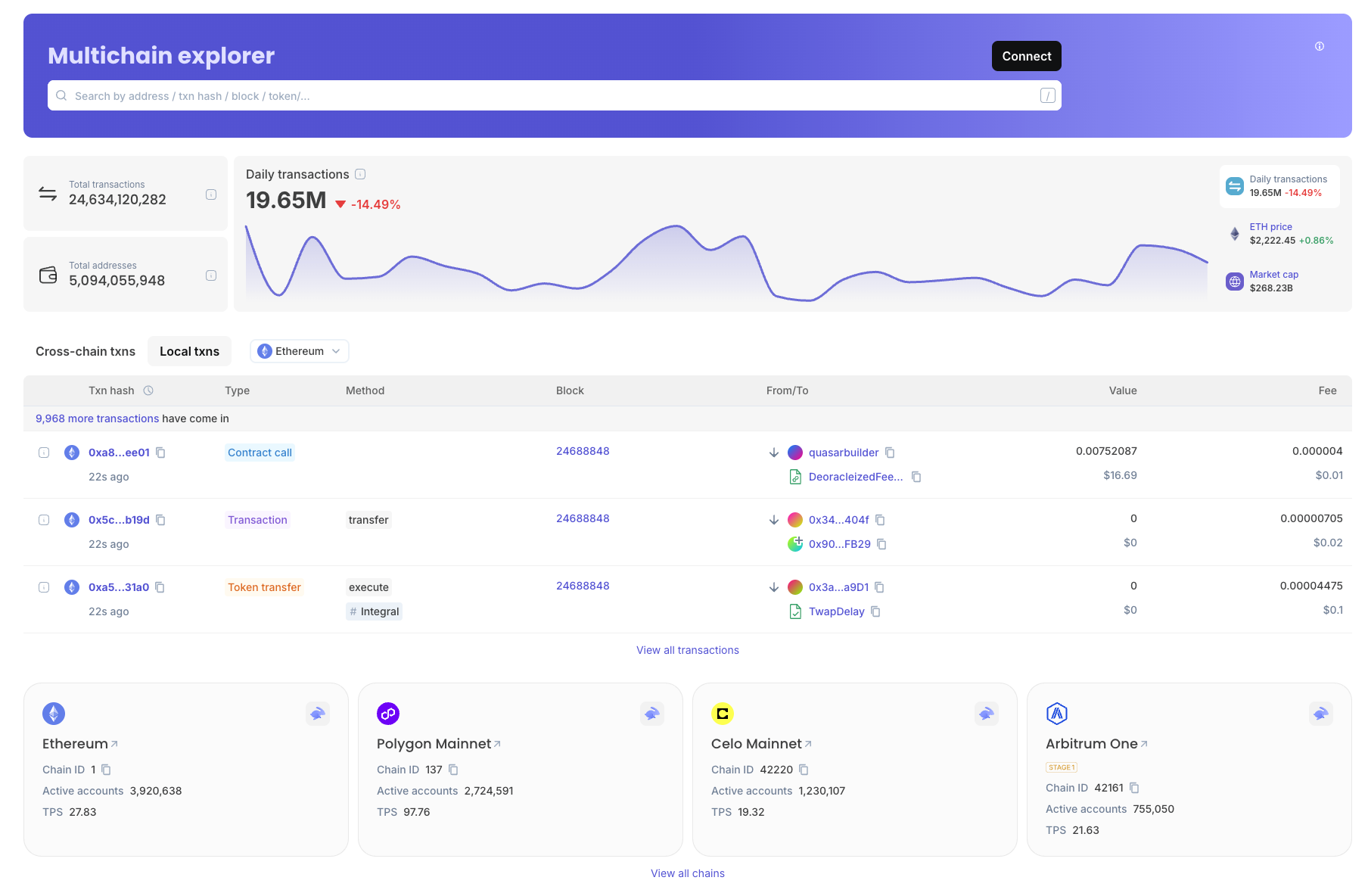
Recent transactions appear in a live feed below the chart, giving a real-time snapshot of activity across the ecosystem.
Below this overview, supported chains with the highest number of active accounts are listed, with key information including chain ID, active addresses, and transactions per second (TPS).
From here, users can quickly navigate into deeper views of network activity.
Switching Between Chains
Even within a multichain explorer, chain-level context still matters of course.
On any relevant page, you can easily toggle between networks to focus on activity within a specific chain. For example, you can view transactions only from OP Mainnet or switch to another network like Ink or Unichain.
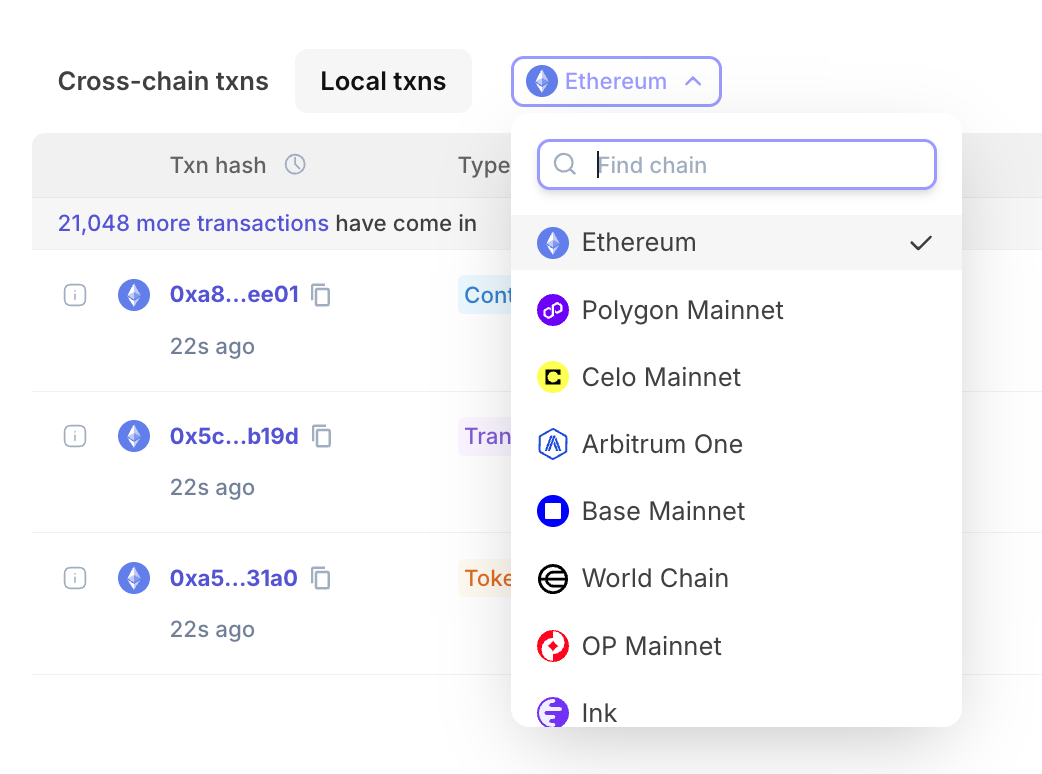
This makes it possible to move easily between ecosystem-level discovery and chain-level analysis.
Ecosystems and Network Activity
The Ecosystems page provides a broader view of network activity across chains.
Here, you can compare chains using metrics such as:
- Active addresses (7-day activity)
- New addresses
- Daily transactions
- Transactions per second
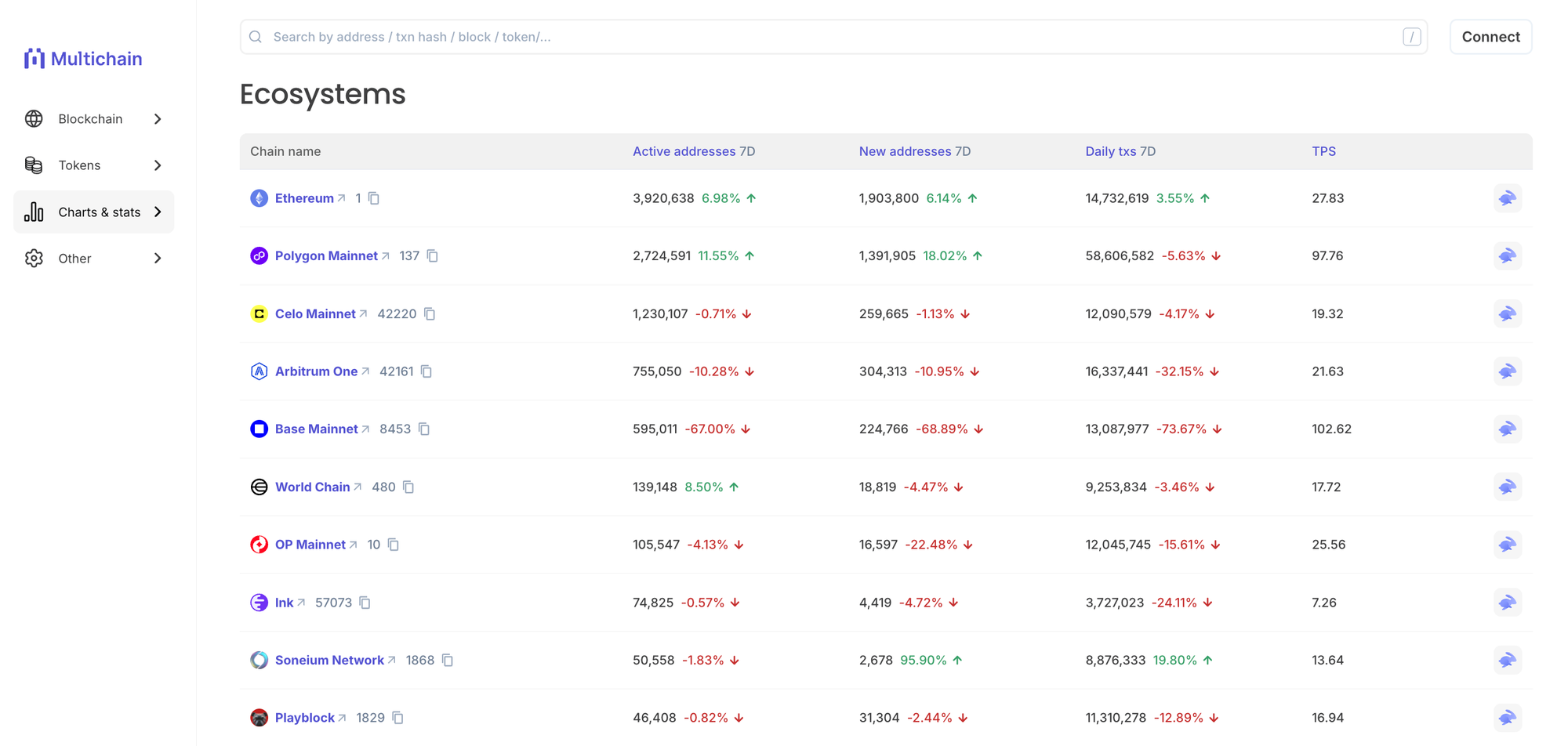
Chains can be sorted by these metrics, making it easy to identify:
- Growing ecosystems
- High activity networks
- Shifts in usage patterns
Percentage changes also help highlight trends in network growth. For analysts, builders, and researchers, this page offers a simple way to understand how activity is distributed across the EVM ecosystem.
Tokens Across Chains
The Tokens page allows you to explore token data across networks. Filter tokens by chain or view token activity across all supported networks. Token types can also be filtered, including:
- ERC-20 tokens
- ERC-721 NFTs
- ERC-1155 assets
- Native tokens
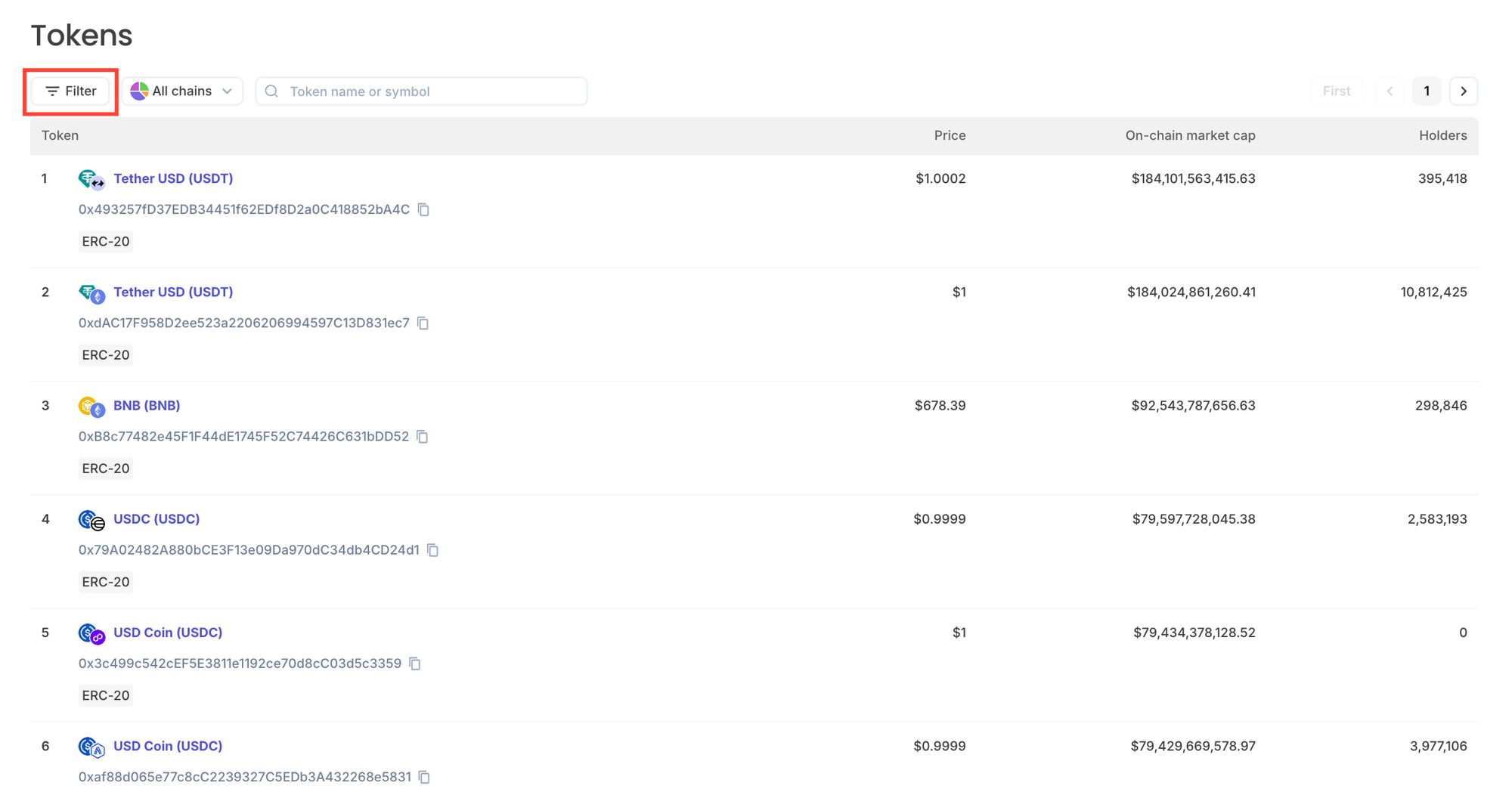
This makes it easier to discover tokens deployed across multiple ecosystems and compare activity across chains.
For example, a token might exist on Ethereum and several L2s. The multichain explorer helps users navigate that distribution without needing to search separate explorers for each network.
Token metrics such as price, market cap, and holder counts are displayed directly in the interface.
Search: One Query Across the Ecosystem
In the multichain explorer, search has been streamlined to return results across multiple chains simultaneously. You can search for addresses, tokens, NFTs, contracts, public tags, and dapps.
Results are grouped into categories so you can quickly navigate to the relevant result. For example, searching for an ENS name or wallet address leads directly to the address page, where you can view activity across relevant chains.
Instead of searching chain by chain, discovery starts with a single query.
Cross-chain Wallet Analysis (EOA Pages)
One of the most powerful features of the multichain explorer is the cross-chain wallet view. When viewing an externally owned account (EOA), you can see a full portfolio breakdown across chains.
This includes total net worth, asset distribution, token balances, NFT holdings, and transaction activity.
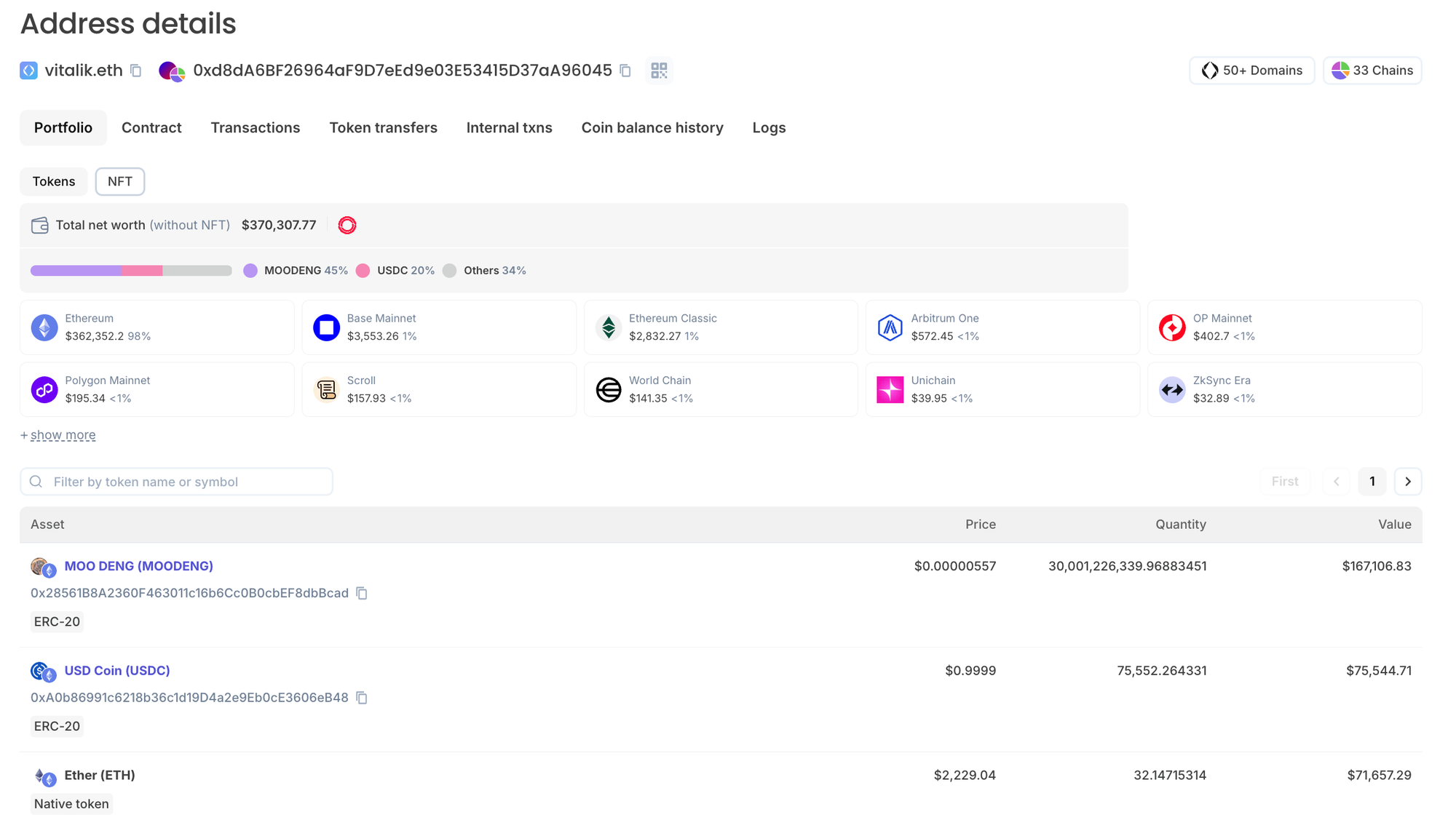
Assets are grouped by network, showing how a wallet’s holdings are distributed across chains.
For example, a wallet might hold:
- 60% of its assets on Ethereum
- 25% on OP chains
- 10% on Base
- 5% on other networks
This percentage breakdown provides immediate insight into how users allocate assets across ecosystems.
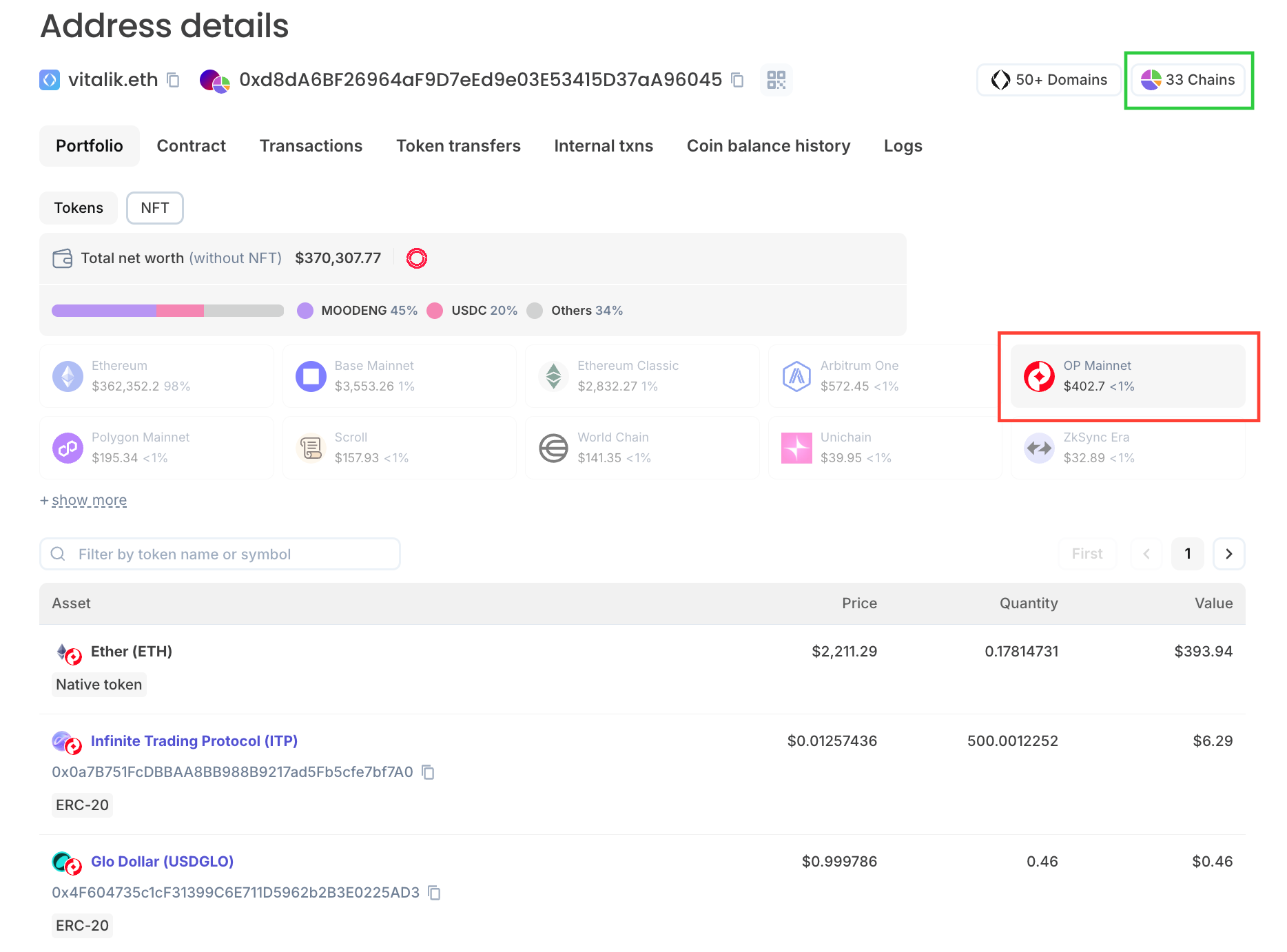
If you select one of the Chain cards (red box in the image below) you will see the breakdown of assets held on that specific chain. You can navigate to the EOA's page on the relevant block explorer from the Chain dropdown (green box in the image below) in the upper right corner.
NFTs and Asset Collections
NFT holdings are also visible within the wallet view. Browse NFT collections held by an address across networks, organized by collection or asset type.
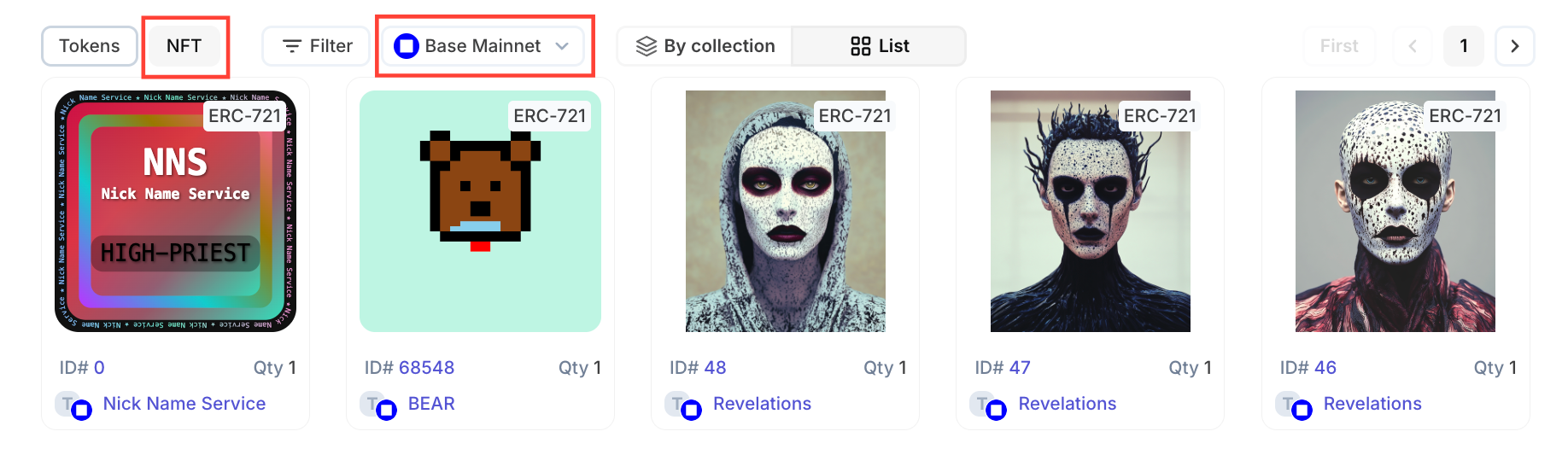
NFTs can be filtered by chain and token standard, and grouped by collection or a plain list. This makes it easy to explore how NFT assets are distributed across ecosystems and collections.
Contract Pages
Contract pages in the multichain explorer provide familiar information such as transaction activities, transfers, holdings and read/write functionalities.
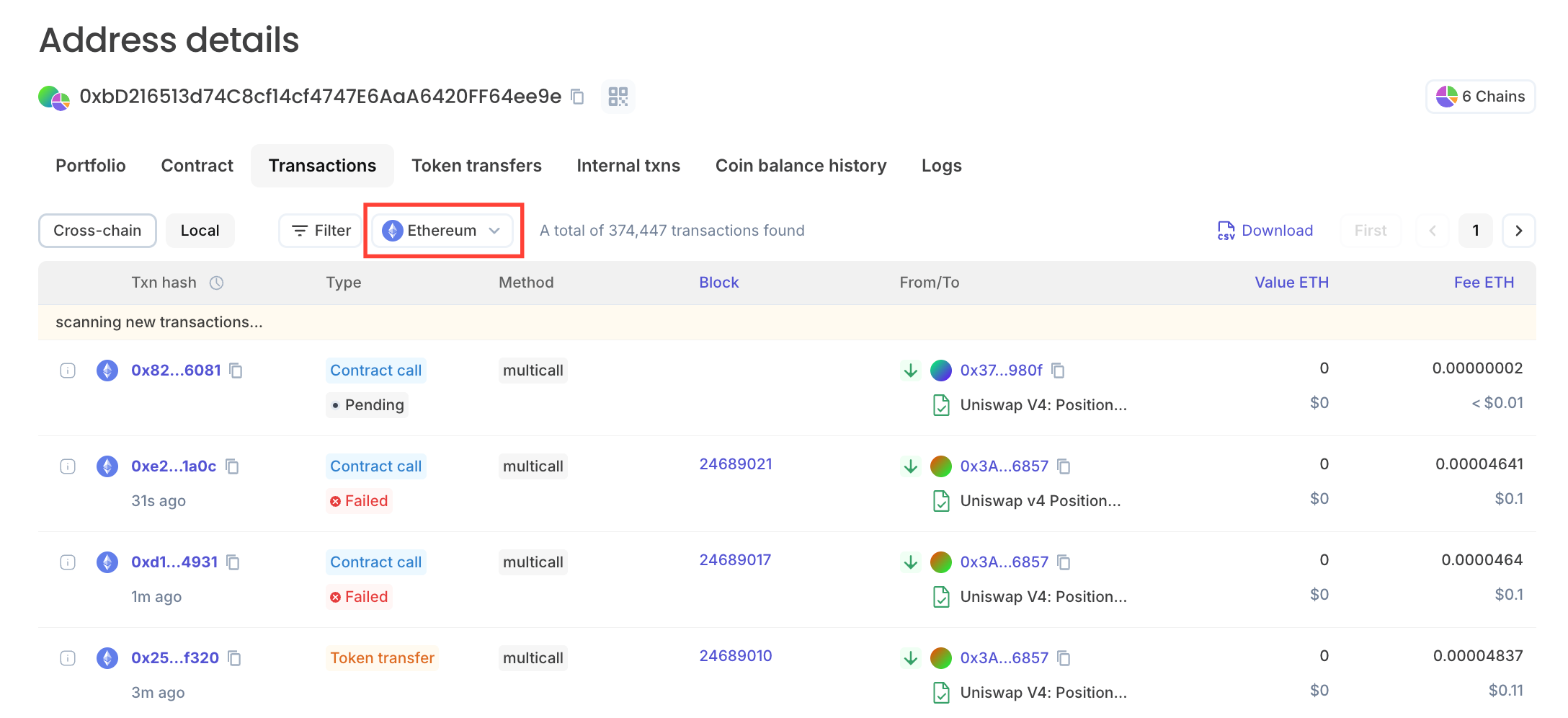
When a contract exists across multiple networks, you can switch between chains directly from the interface. This makes it easier to analyze contract deployments and activity across ecosystems.
Onchain Stats
The multichain explorer also includes a dedicated Charts & Stats section, providing a structured view of onchain activity across supported networks.
- Select a specific chain from a dropdown
- Switch between timeframes (from short-term views to longer historical trends)
- Explore activity through interactive charts
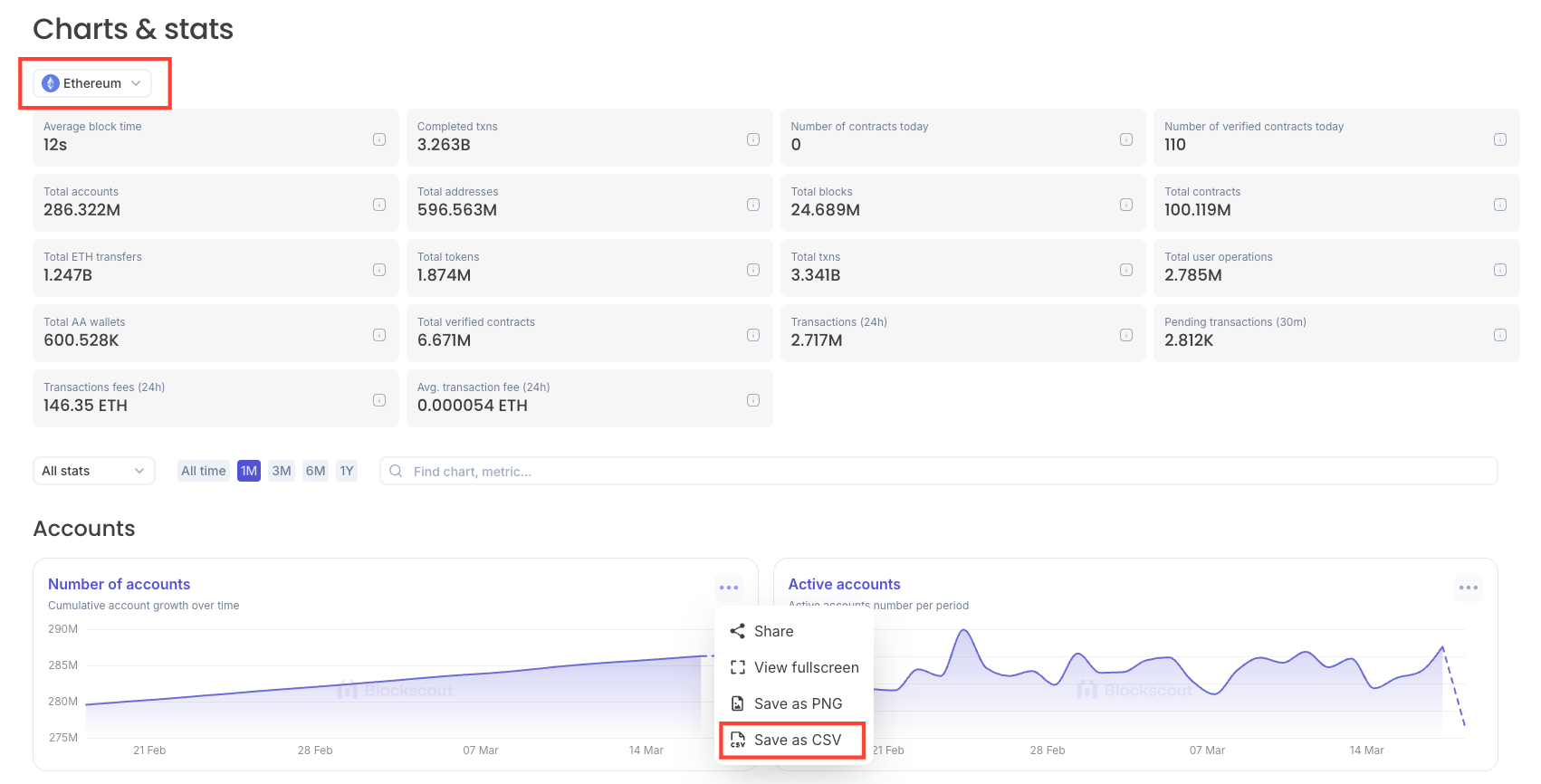
The data spans multiple categories, including account growth, active users, transaction activities, contract deployment, user operations and account abstraction metrics.
Each chart provides a clear view of how activity evolves over time, making it easier to spot trends, spikes, and shifts in usage. For deeper analysis, chart data can be downloaded as PNG or CSV, allowing users to export and work with the raw data externally.
Reputation only
From the gear icon at the top right, you can filter out tokens with a poor reputation for a cleaner view and more meaningful data across all sections in the multichain explorer.
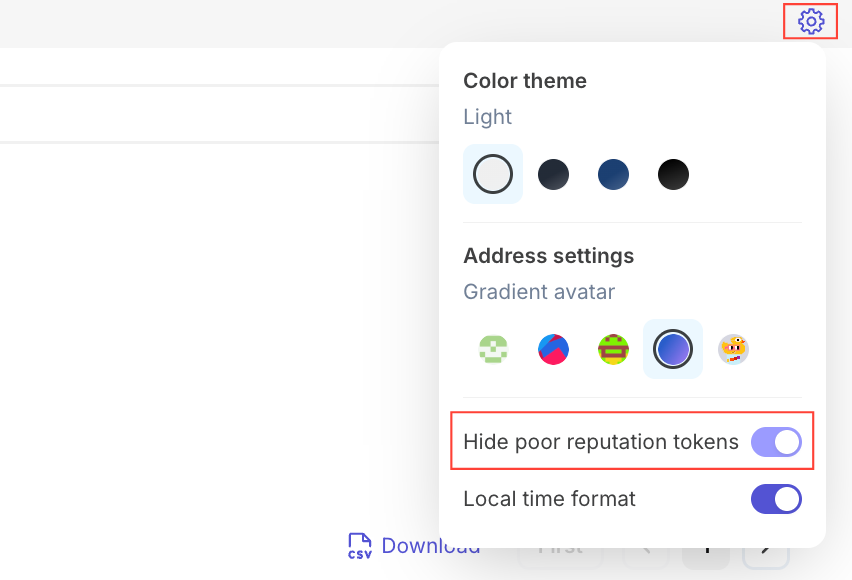
This helps reduce noise and improve clarity when analyzing wallet holdings.
A New Starting Point for Onchain Discovery
The Multichain Explorer is the starting point for understanding activity across the broader EVM ecosystem.
From one interface, you can:
- search across chains
- analyze wallets across networks
- compare ecosystem activity
- explore token distribution across ecosystems
And when deeper analysis is required, you can still jump directly into chain-specific explorers.
As the EVM ecosystem continues to expand, tools for exploring it need to evolve as well. The Blockscout Multichain Explorer provides exactly that: a unified discovery layer for the EVM and a unified view of the EVM ecosystem.
Explore the multitude: