
Blockscout in the Lab: How Researchers and Universities Build on the Explorer


Blockchain is reshaping how people store, share, and verify information, and the use cases now reach well beyond finance. Some of the most interesting work is happening inside universities, where researchers and students are testing what public ledgers can do for everything from academic credentials to systemic risk analysis. A growing number of them are choosing Blockscout to do it.
Why researchers choose Blockscout
The first reason is control. Blockscout can be run on your own infrastructure, including private and closed networks, which matters when a study depends on owning the environment end to end.
In their 2026 article on storing and verifying academic transcripts, Ussatova et al. put it plainly:
"One of the main advantages of Blockscout is its ability to be deployed on your own infrastructure. Unlike public explorers like Etherscan, which only work with public networks, Blockscout can be installed for local use, making it particularly valuable for developments that require data control, independence from external services, and the ability to operate on a closed network."
Beyond owning the environment, researchers point to data completeness, transparency, and multichain coverage. Kistaubayev et al. (2025) reach a similar conclusion in their work on a consortium Ethereum model for higher education:
"As demonstrated by the data presented, using Blockscout in private blockchain networks offers high functionality, transparency, and integration flexibility."
That combination, a self-hostable explorer with serious data depth, is why Blockscout has become a default tool for researchers and educators.
Where Blockscout shows up
In the classroom and at hackathons, Blockscout introduces newcomers to blockchain with a customizable explorer and built-in contract verification. It gives students a real, inspectable view of on-chain activity instead of an abstraction.
In research workflows, it sits alongside tools like Dune and Sourcify rather than replacing them. Together they give a complete picture of what is happening on a chain: Blockscout for contract introspection and address-level history, the others for the slices they cover best.
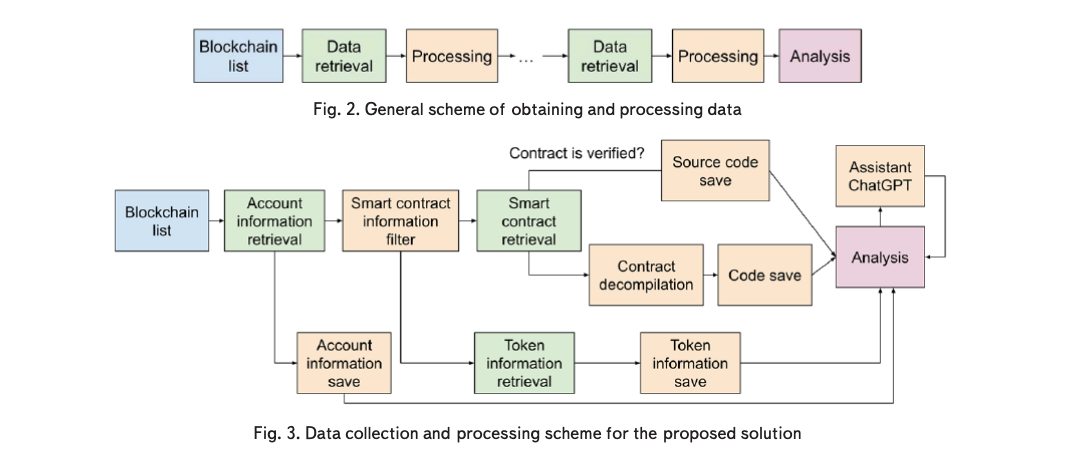
It also enables genuinely novel methods. Dorogyy and Kolisnichenko (2023) used explorers to devise a faster approach to data retrieval for blockchain analysis. And because verification is core to what an explorer does, Blockscout has become a subject of security research in its own right, including work on testing the attack surface of smart contract verification services (Ma et al.).
From coursework to dissertations
The deeper the research, the more useful the tooling has to be. Blockscout shows up in graduate work too, from master's theses such as Bergkamp's 2024 study on the tokenization of real estate assets, to active PhD research.
One PhD candidate is currently running a quantitative study on the contagion effects of bridge exploits across more than twenty chains, and set up a Pro account to support it. Their notes on the new Pro API speak directly to what serious research needs:
Holder enrichment on the Ethereum mainnet instance goes beyond what an Etherscan-equivalent path returns. The OLI integration surfaces governance-incident attribution, entity tagging across major exchanges and custodians, and proxy detection that surfaces implementation contracts across the full set of patterns (eip1967, eip1167, master_copy, eip2535, eip1967_beacon), plus ENS resolution and Farcaster handle linking. Pagination is reliable thanks to the embedded next_call payloads, so the session never needed hand-rolled cursor logic. Rate-limit headroom at the Builder tier was adequate for windowed analysis, and historical indexer depth covers early 2023 on both Ethereum mainnet and Arbitrum One. Cross-chain L2 stress-event replay is executable: pulling token transfers across the March 2023 window returned correctly timestamped blocks and normal bidirectional flow throughout the event.
For operational-risk and stress-event research, that mix of historical depth, multichain coverage, and entity context is hard to assemble anywhere else.
A standing offer for universities and students
We provide free Pro API access to universities and university students who request it. If you are using Blockscout for coursework, a thesis, or in-depth research, we want to help push the envelope forward. As a public good, supporting this kind of work is part of why Blockscout exists.
Contact us about details on free Pro API access
References
Bergkamp, M. C. (2024). Tokenization of Real Estate Assets: Ownership dispersion, diversification, liquidity and correlation with economic fundamentals and the crypto market sentiment [Master's thesis, Erasmus University Rotterdam]. thesis.eur.nl
Dorogyy, Y., & Kolisnichenko, V. (2023). Devising a method for rapid data retrieval using explorers for blockchain analysis. Eastern-European Journal of Enterprise Technologies, 4(2(124)), 6–16. https://doi.org/10.15587/1729-4061.2023.286079
Iwanicki, A. Synergy of Diversity: Data, Modeling and Decisions. Synergy of Diversity, 23.
Kistaubayev, Y., Liébana-Cabanillas, F., Shaikh, A. A., Mutanov, G., Ussatova, O., & Shinbayeva, A. (2025). Enhancing Transparency and Trust in Higher Education Institutions via Blockchain: A Conceptual Model Utilizing the Ethereum Consortium Approach. Sustainability, 17(20), 9350. https://doi.org/10.3390/su17209350
Ma, P., He, N., Huang, Y., Wang, H., & Luo, X. Abusing the Ethereum Smart Contract Verification Services for Fun and Profit. Huazhong University of Science and Technology, Peking University, and The Hong Kong Polytechnic University.
Ussatova, O., Karyukin, V., Begimbayeva, Y., Mutanov, G., Kistaubayev, Y., & Turdaliyev, M. (2026). Application of Blockchain Technologies and Smart Contracts for the Storage and Verification of Academic Transcripts in the Higher Education Systems. Information, 17(5), 478. https://doi.org/10.3390/info17050478